

We Accept Most Major Insurances













Our Partial Hospitalization Program near Los Angeles
We’ve helped thousands of people best manage SUDs and poor mental health by facilitating the opportunity to create new, meaningful relationships with others in recovery and lives that they never thought were possible.
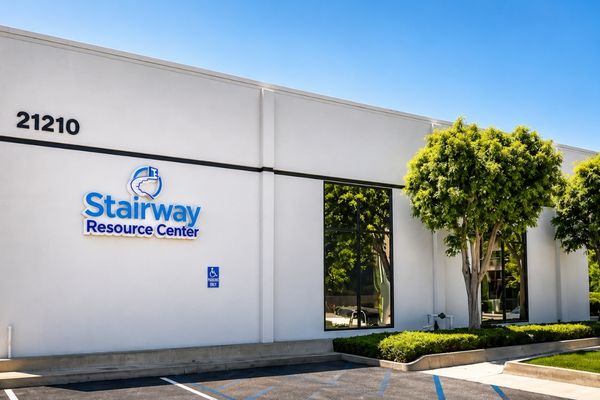
Our Recovery Center in Woodland Hills, CA
What Sets Us Apart
Our comprehensive approach combines clinical expertise, spiritual recovery, and community support to guide clients toward lasting sobriety and mental wellness.
True Dual Diagnosis Expertise
Deep 12-Step Integration
Long-Term Structured Care
In-House Advanced Mental Health Treatment
Community Engagement & Service
Relapse Prevention Leadership

The Benefits of Our PHP Rehab in Woodland Hills
Our partial hospitalization program at Stairway Resource Center can be a beneficial option. Knowing that balancing different facets of life can be challenging, our PHP helps you maintain your daily routine. You can complete daily responsibilities and receive addiction treatment later in the day for reduced stress.
Individualized Treatment Plans
Evidence-Based Therapies
Complementary mental health treatment using individualized approaches such as eye movement desensitization and reprocessing (EMDR), neurofeedback, brainspotting, and Transcranial Magnetic Stimulation (TMS), alongside clinical care or partial hospitalization, can support your overall wellness. It can also promote treatment engagement and skill-building, helping you achieve a higher quality of life.
Group Therapy and Family Involvement
Holistic Therapies in Partial Hospitalization
We believe that patients like you can achieve long-term sobriety through healthy healing. Our recovery team also encourages mindfulness practices, meditation, and art therapy. Exercise, spiritual work, breath work, and acupuncture can further enhance your behavioral health to achieve lasting recovery from drugs or alcohol.
Other Levels of Care Offered
If you are experiencing challenges managing your severe SUD or co-occurring psychiatric disorder, our IOP may be right for you. Aside from inpatient care or residential treatment, our IOP can provide a moderate level of care without required hospitalization. It can also serve as a step-down form of care to ensure support for long-term recovery through structured aftercare planning.

Addictions and Co-Occurring Disorders Treated
Our treatment team can help you manage drug addiction and alcohol use disorder and co-occurring mental health conditions, including depression, anxiety, obsessive compulsive disorder (OCD), post-traumatic stress disorder (PTSD), bipolar disorder, and more.

How We Support Long-Term Recovery
Signs It’s Time for Dual Diagnosis Treatment
Accreditations


FAQs
Yes! We accept most major insurance plans, making access to treatment more affordable and convenient for our clients. Our team recommends that you contact your insurance provider directly to confirm coverage specifics and any potential out-of-pocket costs. We can also assist you in understanding your benefits and navigating the insurance process. Stairway Resource Center’s goal is to work with you to ensure that financial barriers do not prevent you from receiving the care you need.
A partial hospitalization program (PHP) provides structured outpatient care. Our PHP can be an alternative to an inpatient program. However, a partial hospitalization program is typically more intense than the care you receive at a therapist’s office or physical exam with your family care practitioner. PHP typically involves over 20 hours of therapeutic care per week. Rather than staying overnight in a residential facility, you can receive the addiction or mental health treatment you need during the day and return home in the evening to rest.
The main difference between PHP and IOP is the level of care and length of treatment. You can expect to dedicate more time to treatment for a longer period if you move forward with our partial hospitalization program. PHPs typically involve several hours of therapy each day, whereas IOPs are less intensive, often occurring a few times a week. The decision between the two depends on the severity of your condition and your individual recovery goals. Both programs are designed to provide structured support, but the intensity and duration can vary to meet your needs best.
Our partial hospitalization program lasts between two and six weeks. However, the length of stay or intensity of care can vary depending on your unique treatment needs. Some individuals may require a shorter duration if symptoms improve quickly, while others may need additional time for stabilization. Our team regularly assesses progress to determine the appropriate length of stay. Flexibility is built into the program to ensure that each patient receives personalized care tailored to their recovery trajectory.
Medications ensure comfort, but we ultimately want to promote abstinence. However, we do provide medication management or medication-assisted treatment (MAT) if necessary. We aim to reduce withdrawal symptoms and cravings through these medications, which can support long-term sobriety. Nonetheless, our primary goal is to incorporate these into a comprehensive treatment plan that also includes therapy and behavioral interventions, such as cognitive behavioral therapy (CBT), dialectical behavior therapy (DBT), and others. We do not prescribe narcotic medication at the outpatient program to prevent dependency and promote a sustainable recovery process.
For those who require detoxification before treatment, we can refer out for that level of care as well as inpatient rehab, and step in when it’s time for a lower level. Medical detox is a vital first step in the process.